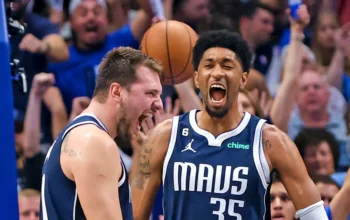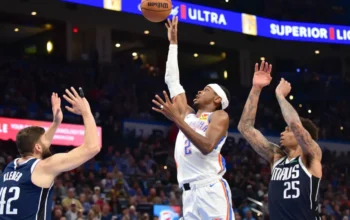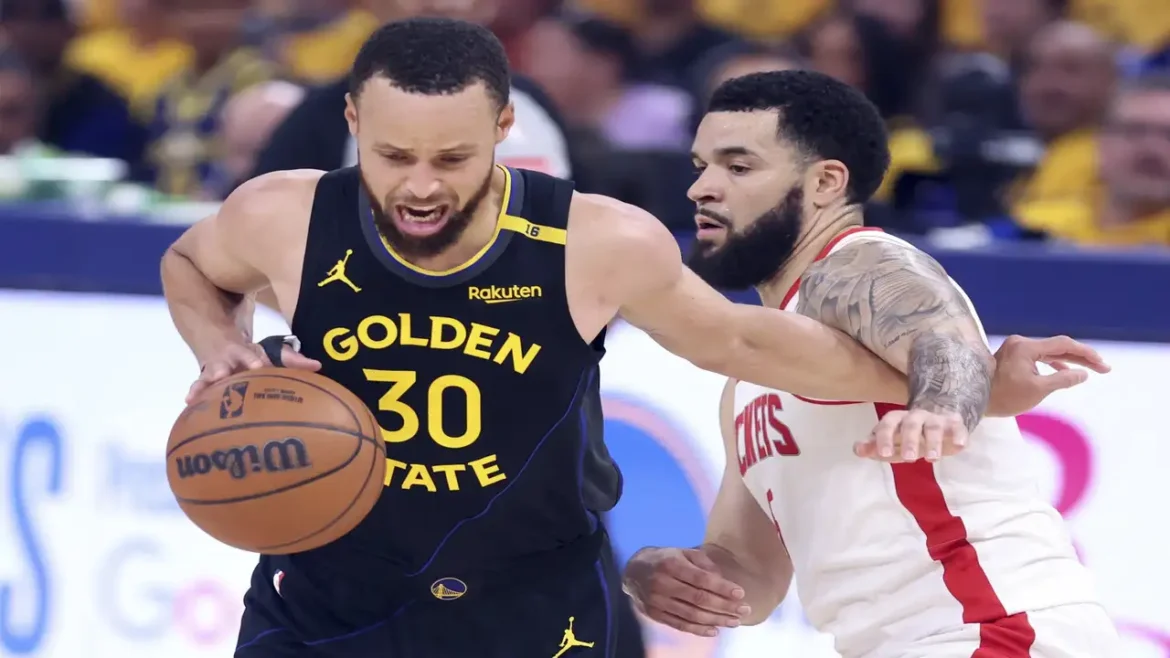
The Golden State Warriors vs Houston Rockets match player stats matchup always draws attention because it blends championship pedigree with youthful ambition. When these two Western Conference teams meet, the game often becomes a contrast of styles—Golden State’s motion-heavy offense and three-point mastery against Houston’s athletic, fast-paced, and increasingly disciplined approach. Player statistics from this matchup go beyond basic points and rebounds; they tell a deeper story of shot selection, defensive assignments, ball movement, and efficiency under pressure.
Stephen Curry’s Scoring Impact and Efficiency
In any Golden State Warriors vs Houston Rockets match player stats breakdown, Stephen Curry’s numbers dominate the narrative. Curry typically leads all scorers, often finishing with totals ranging between 28 and 36 points against Houston. His field goal percentage usually hovers around the mid-40s, while his three-point shooting often exceeds 40 percent, especially when Houston’s perimeter defense struggles with off-ball movement. Beyond scoring, Curry’s true shooting percentage highlights his efficiency, as his ability to draw fouls and convert free throws boosts his overall offensive value.
Klay Thompson’s Shooting Rhythm and Defensive Assignments
Klay Thompson’s stats in the Golden State Warriors vs Houston Rockets Match Player Stats often reflect his role as both a secondary scorer and an elite perimeter defender. Thompson usually contributes between 18 and 25 points, with most of his offense coming from catch-and-shoot opportunities. His three-point attempts per game are serious, and when he finds rhythm early, his shooting splits improve dramatically. Defensively, Thompson is often tasked with guarding Houston’s top wing scorer, and his steals and contested shot numbers illustrate his two-way impact.
Draymond Green’s All-Around Statistical Influence
Draymond Green rarely leads the box score in points, but his Golden State Warriors vs Houston Rockets match player stats line is often one of the most complete. Green typically records between 8 and 12 points, 9 to 11 rebounds, and 7 to 10 assists, flirting with triple-double territory. His defensive metrics—such as deflections, blocks, and opponent field goal percentage when he is the primary defender—highlight his importance. Against Houston’s young frontcourt, Green’s defensive IQ often neutralizes athletic advantages.
Andrew Wiggins’ Two-Way Contributions
Andrew Wiggins plays a crucial role in balancing Golden State’s lineup. In this matchup, Wiggins often scores between 16 and 22 points while shooting efficiently from mid-range and the corners. His rebounding numbers, typically around 5 to 7 boards, help the Warriors compete physically with Houston. Wiggins’ defensive stats, including contested shots and on-ball stops, show his effectiveness against Houston’s explosive guards and wings.
Kevon Looney’s impact in the Golden State Warriors vs Houston Rockets match player stats column is best measured through hustle statistics. Looney usually finishes with modest scoring totals, often under 10 points, but his rebounding numbers—especially offensive rebounds—are critical. He frequently grabs 8 to 12 rebounds and sets a high number of effective screens. His defensive presence in the paint limits second-chance points and forces Houston into tougher interior shots.
Warriors Bench Production and Efficiency Metrics
Golden State’s bench stats often determine the outcome of games against Houston. Players like Jonathan Kuminga, Moses Moody, and Brandin Podziemski contribute varying levels of scoring and energy. Bench units usually combine for 30 to 40 points, with efficiency depending on ball movement and transition opportunities. Plus-minus statistics often reveal that when the Warriors’ bench maintains or extends leads, Golden State gains a significant advantage.
Houston Rockets’ Team Scoring Balance
From the Rockets’ perspective, the Golden State Warriors vs Houston Rockets match player stats reflect a more balanced scoring approach. Unlike Golden State’s star-driven offense, Houston often has five or six players scoring in double figures. This balance keeps defenses honest and prevents overreliance on a single scorer. Team assist numbers are a key indicator, as Houston’s offense improves dramatically when ball movement is consistent.
Jalen Green is often Houston’s leading scorer in this matchup, averaging between 22 and 30 points against Golden State. His shot attempts are serious, reflecting his role as the primary offensive weapon. While his field goal percentage can fluctuate, his ability to attack the rim and draw fouls boosts his scoring efficiency. Turnover numbers are also important, as Golden State’s defense often pressures Green into difficult decisions.
Alperen Şengün’s Post Play and Playmaking Stats
Alperen Şengün’s Golden State Warriors vs Houston Rockets match player stats showcase his versatility as a modern center. Şengün typically records 15 to 20 points, 8 to 11 rebounds, and 5 to 7 assists. His ability to facilitate offense from the post creates mismatches against Golden State’s switching defense. Advanced stats such as assist percentage and usage rate highlight how central he is to Houston’s offensive flow.
Fred VanVleet’s statistical contributions go beyond scoring. In this matchup, VanVleet often finishes with 14 to 20 points and 6 to 9 assists. His three-point shooting stretches Golden State’s defense and opens lanes for drives. Defensively, his steal numbers and on-ball pressure are critical in disrupting Golden State’s rhythm, especially when guarding Curry or Thompson during key stretches.
Historical Context of Warriors vs Rockets Statistical Battles
Looking deeper into the Golden State Warriors vs Houston Rockets match player stats, historical trends add valuable context. Over the past decade, these teams have met in regular-season clashes and high-stakes playoff series, with statistics often reflecting shifting power dynamics. During the Warriors’ championship years, Golden State consistently led in offensive rating, three-point efficiency, and assist percentage. Houston, particularly during its transition years, relied more on isolation scoring and defensive rebounding. These long-term statistical patterns help explain how current performances are shaped by organizational philosophy and roster construction.
Shot Distribution and Offensive Zones Analysis
Shot chart data is an essential part of analyzing Golden State Warriors vs Houston Rockets match player stats. Golden State typically dominates beyond the arc and in off-ball cutting zones near the basket, with Curry and Thompson generating high-value shots through movement. Houston, by contrast, often scores more efficiently in the paint and mid-range areas, especially through Şengün’s post work and Green’s slashing drives. Comparing points per possession by zone reveals why defensive schemes focus heavily on limiting Golden State’s perimeter looks.
Free-throw statistics often tilt the momentum in this matchup. Golden State usually ranks lower in free-throw attempts but compensates with elite shooting efficiency. Houston, however, frequently attacks the rim, resulting in higher foul-drawn numbers. Jalen Green and Şengün lead Houston in free throw attempts, while Curry’s free throw percentage often exceeds 90 percent, making every trip to the line count. These numbers matter greatly in close games, especially during clutch possessions.
Assist Networks and Ball Movement Metrics
One of the most fascinating aspects of the Golden State Warriors vs Houston Rockets match player stats is assist distribution. Golden State’s offense features a complex web of assists, with Green, Curry, and secondary playmakers all contributing. High secondary assist numbers indicate how often the ball moves before a shot is made. Houston’s assist numbers improve significantly when VanVleet and Şengün share the floor, reflecting a more structured offensive flow compared to isolation-heavy lineups.
Defensive matchup statistics show how well players handle assignments. Golden State’s switching defense often forces Houston into late-clock situations, reflected in lower shot quality metrics. Houston counters by using size mismatches, particularly when Şengün faces smaller defenders. Tracking points allowed per possession in these matchups highlights which defensive strategies succeed and which require adjustment during the game.
Dillon Brooks’ Defensive Metrics and Scoring Role
Dillon Brooks’ stats in the Golden State Warriors vs Houston Rockets Match Player Stats often reflect his defensive intensity. While his scoring averages range from 10 to 16 points, his true value lies in defensive assignments. Brooks frequently guards Golden State’s top scorer, and his contested shots, deflections, and fouls drawn illustrate his physical style. His plus-minus rating often indicates how effectively he disrupts Golden State’s offensive flow.
Houston’s bench statistics play a major role in maintaining competitiveness. Players like Amen Thompson, Cam Whitmore, and Jeff Green provide energy, defense, and scoring bursts. Bench units typically contribute 35 to 45 points, with fast-break scoring being a significant factor. Rebounding and turnover differential during bench minutes often determine whether Houston can keep pace with Golden State’s scoring runs.
Three-Point Shooting Comparison and Efficiency
A defining feature of the Golden State Warriors vs Houston Rockets match player stats is three-point shooting. Golden State usually attempts 40 or more threes per game, converting at a higher percentage than Houston. Curry and Thompson alone can account for over half of those attempts. Houston, while improving, tends to rely more on drives and mid-range shots, making three-point efficiency a key statistical separator.
Defensive ratings provide deeper insight into player performance. Golden State’s defensive efficiency improves when Green and Wiggins share the floor, limiting Houston’s paint scoring. Houston’s defensive rating improves when Brooks and VanVleet apply perimeter pressure. Individual matchup stats, such as opponent field goal percentage when guarded, highlight which defenders successfully limit star players.
Rebounding Battle and Second-Chance Points
Rebounding statistics often swing the outcome of this matchup. Houston’s athletic frontcourt gives them an edge in offensive rebounds, while Golden State relies on positioning and teamwork. Second-chance points usually favor the team with higher offensive rebounding percentages, making this a critical area in the Golden State Warriors vs Houston Rockets match player stats breakdown.
Turnover numbers and fast-break points reflect each team’s pace. Golden State thrives when turnovers are low and ball movement is crisp. Houston benefits from forcing turnovers and converting them into transition baskets. The assist-to-turnover ratio is a key statistic, often revealing which team controls the tempo and executes effectively under pressure.
Clutch Time Player Stats and Late-Game Execution
Clutch time statistics—defined as the final five minutes of a close game—offer valuable insights. Stephen Curry’s clutch shooting percentage is typically elite, while VanVleet and Jalen Green shoulder late-game responsibilities for Houston. Free-throw percentage, shot selection, and defensive stops in clutch moments often decide the outcome.
Advanced stats such as Player Efficiency Rating (PER), usage rate, and on-off splits provide a deeper understanding of impact. Curry and Şengün often lead their teams in PER, while Green’s on-off numbers highlight his defensive value. These analytics enrich the Golden State Warriors vs Houston Rockets match player stats discussion beyond traditional box scores.
Final Thoughts
The Golden State Warriors vs Houston Rockets match player stats reflect more than just numbers; they capture a clash of experience and growth. Golden State’s stars excel in efficiency, spacing, and execution, while Houston’s young core showcases athleticism, balance, and resilience. Each stat line contributes to a larger narrative of strategy, development, and competitive intensity, making this matchup one of the most analytically rich encounters in the NBA.