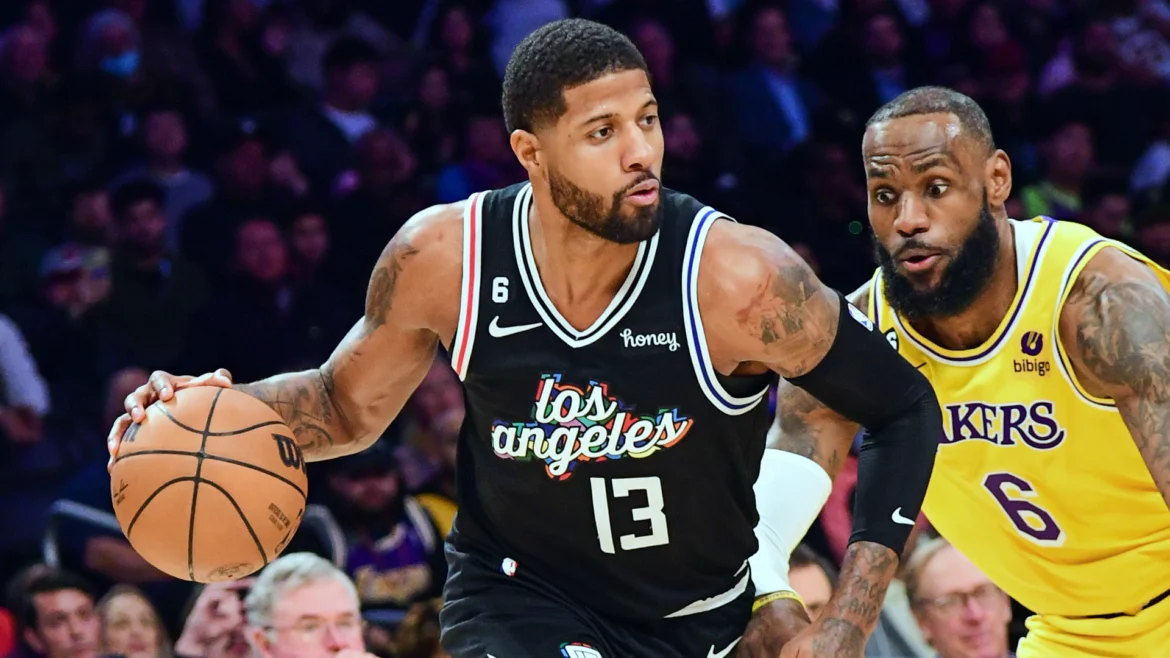
The LA Clippers vs Lakers match player stats always draw massive attention because this matchup is more than just another NBA game—it’s a battle for Los Angeles supremacy. Every possession feels intense, every basket is magnified, and player performances are scrutinized heavily by fans, analysts, and fantasy basketball enthusiasts. When the Clippers and Lakers face off, individual stats often tell a deeper story than the final score, revealing which stars rose to the occasion, which role players stepped up, and how tactical decisions influenced the game’s momentum. This article explores the match player stats in detail, highlighting scoring efficiency, defensive contributions, playmaking impact, and overall influence on the game’s outcome.
Star Power on Display: Clippers’ Leading Performers
In any LA Clippers vs Lakers match player stats analysis, attention naturally starts with the Clippers’ star players. The Clippers rely heavily on their elite wings and versatile scorers to set the tone early. Their leading scorer often showcases efficient shooting splits, combining mid-range excellence with timely three-point shooting. Field goal percentage becomes a critical metric here, as it reflects not just volume scoring but smart shot selection under pressure. In this matchup, the Clippers’ top scorer frequently attacks mismatches, drawing fouls and boosting free-throw numbers, which adds silent value beyond raw points.
Beyond scoring, rebounds and assists paint a fuller picture of impact. Clippers stars tend to contribute on the glass, particularly defensive rebounds that prevent second-chance opportunities for the Lakers. Assist totals highlight unselfish play, especially when double teams force kick-outs to open shooters. Steals and blocks further underline defensive engagement, proving that the Clippers’ leaders influence both ends of the court, not just the scoreboard.
Lakers’ Superstars and Their Statistical Influence
On the Lakers’ side, LA Clippers vs Lakers match player stats often revolve around their superstar duo. These players carry enormous offensive responsibility, and their stat lines usually reflect high usage rates. Points per game in this matchup can be impressive, but efficiency is what separates a good performance from a great one. Shooting percentages from the field and beyond the arc indicate whether the Lakers’ stars managed to break through the Clippers’ defensive schemes or were forced into contested looks.
Rebounding is another key area where Lakers superstars shine. Their ability to secure boards—especially offensive rebounds—creates extra possessions that swing momentum. Assist numbers also matter, as they show how effectively stars involve teammates when defenses collapse. Defensive stats such as blocks and steals highlight rim protection and perimeter awareness, crucial against a Clippers team known for aggressive drives and ball movement.
Role Players Who Changed the Game for the Clippers
While stars dominate headlines, LA Clippers vs Lakers match player stats often reveal the hidden impact of role players. Bench contributions can be the difference between a narrow loss and a statement win. Clippers’ role players typically provide scoring bursts during crucial stretches, with points off the bench being a vital stat category. Three-point shooting percentages from these players often reflect their readiness to capitalize on open looks created by star playmakers.
Defensively, role players contribute through hustle stats—deflections, steals, and contested shots. Plus-minus ratings become particularly insightful here, showing how the Clippers performed while these players were on the floor. A positive plus-minus suggests strong chemistry and effective execution, even without the main stars present. These contributions may not always dominate box scores, but they shape the game’s rhythm and energy.
Lakers’ Supporting Cast and Their Statistical Contributions
In the LA Clippers vs Lakers match player stats discussion, the Lakers’ supporting cast plays a critical role in determining balance. When bench players score efficiently and defend consistently, pressure eases on the stars. Points per possession and shooting splits highlight whether these players maximized their opportunities. Catch-and-shoot efficiency, especially from beyond the arc, becomes a telling stat against a Clippers defense that prioritizes paint protection.
Rebounds and assists from role players show versatility and willingness to do the dirty work. Defensive metrics, such as defensive rating while on the court, provide insight into how well these players held their own against Clippers’ scoring runs. Often, it’s the Lakers’ bench response during momentum swings that keeps games competitive deep into the fourth quarter.
Point Guard Matchup: Playmaking and Control
The point guard duel is a fascinating component of LA Clippers vs Lakers match player stats. Assists-to-turnover ratio becomes one of the most important indicators of effectiveness. Clippers guards often emphasize ball security and tempo control, ensuring that offensive sets are executed smoothly. High assist totals paired with low turnovers suggest disciplined playmaking and strong court vision.
For the Lakers, point guard stats reflect pace and aggression. Drives to the basket, free-throw attempts, and secondary assists illustrate how guards pressure the defense and create scoring chances. Defensive stats like steals highlight on-ball pressure and passing lane awareness. This matchup often determines which team controls the game’s flow and dictates late-game execution.
Frontcourt Battle: Rebounds, Blocks, and Interior Scoring
Interior play is a major storyline in any LA Clippers vs Lakers match player stats breakdown. Big men from both teams influence the game through rebounding totals, paint points, and rim protection. Defensive rebounds are especially critical, as they limit transition opportunities. Offensive rebounds, meanwhile, reflect effort and physicality, often leading to put-back points or kick-out threes.
Blocks and altered shots don’t always appear fully in traditional stats, but block numbers still provide a snapshot of defensive presence. Field goal percentage allowed at the rim is another telling metric, showing how effectively big men protected the paint. These interior battles often wear down opponents over the course of the game, influencing late-game stamina and decision-making.
Three-Point Shooting and Perimeter Efficiency
Modern NBA games hinge heavily on three-point shooting, and LA Clippers vs Lakers match player stats clearly reflect this trend. Team three-point percentage often correlates strongly with winning outcomes. For the Clippers, perimeter shooting from wings and guards stretches the floor, opening driving lanes for stars. High-volume shooters are judged not just by makes, but by timing—clutch threes can shift momentum instantly.
The Lakers’ three-point stats often highlight streakiness. When shooters find rhythm, spacing improves dramatically, allowing stars to attack more freely. Conversely, cold shooting nights force reliance on isolation play. Tracking individual three-point attempts, makes, and effective field goal percentage helps explain offensive efficiency beyond raw point totals.
Defensive Impact Beyond the Box Score
Defense is sometimes underrepresented in standard LA Clippers vs Lakers match player stats, but advanced metrics fill the gap. Defensive rating, opponent shooting percentages, and on/off court splits provide context for individual contributions. Clippers defenders often excel at switching and help defense, reflected in lower opponent field goal percentages when certain players are on the floor.
Lakers defenders, particularly versatile wings, impact games through positional flexibility. Steals and deflections disrupt offensive rhythm, while contested shots force tougher scoring attempts. Even if block and steal numbers appear modest, the cumulative effect of disciplined defense often becomes evident in fourth-quarter scoring droughts by the opponent.
Clutch-Time Player Stats and Late-Game Execution
One of the most compelling aspects of LA Clippers vs Lakers match player stats is clutch performance. Points scored in the final five minutes, shooting efficiency under pressure, and free-throw accuracy become decisive. Clippers’ go-to closers often show high usage rates combined with strong efficiency, reflecting confidence and trust from coaches.
For the Lakers, clutch stats highlight star leadership. Assist numbers in crunch time indicate whether stars opted to create for others or take over scoring duties. Turnovers in late-game situations are especially costly, making ball security a crucial stat. These clutch-time metrics often explain why certain games swing dramatically in the closing moments.
Foul Trouble, Free Throws, and Physicality
Physicality defines the LA Clippers vs Lakers rivalry, and match player stats around fouls and free throws tell an important story. Players who draw fouls consistently contribute beyond scoring, putting opponents in foul trouble and altering defensive rotations. Free-throw attempts and percentage reflect composure and aggression.
Conversely, personal foul totals highlight defensive challenges. Players forced to sit due to foul trouble can disrupt rotations and momentum. Tracking fouls drawn versus fouls committed provides insight into which team controlled physical play and leveraged officiating dynamics effectively.
Advanced Metrics: Efficiency and Impact Ratings
Advanced statistics elevate LA Clippers vs Lakers match player stats to a deeper analytical level. Player efficiency rating (PER), true shooting percentage, and usage rate contextualize traditional stats. A player scoring 25 points on high efficiency offers far more value than one scoring the same total on excessive shots.
Plus-minus and net rating further illuminate impact. A player with modest box score numbers but a strong positive plus-minus may have influenced spacing, defense, or ball movement significantly. These metrics help identify unsung heroes whose contributions aren’t immediately obvious.
Comparing Team Depth Through Player Stats
Depth becomes evident when analyzing LA Clippers vs Lakers match player stats across rotations. The Clippers often showcase balanced scoring, with multiple players reaching double figures. This distribution reflects strong bench productivity and strategic rotations.
The Lakers’ depth stats may highlight reliance on star-heavy lineups. When bench scoring keeps pace, the team looks formidable; when it falters, stars shoulder increased burdens. Comparing minutes played, fatigue indicators, and fourth-quarter efficiency reveals how depth influences overall performance.
Coaching Strategies Reflected in Player Numbers
Coaching decisions subtly shape LA Clippers vs Lakers match player stats. Rotations, defensive assignments, and offensive schemes manifest in minute distribution and usage rates. Clippers coaches often emphasize versatility, resulting in balanced stat lines across positions.
Lakers coaching strategies may focus on maximizing star efficiency, reflected in high pick-and-roll usage and isolation scoring stats. Timeout adjustments often show up in second-half shooting improvements or defensive tightening, visible through opponent scoring trends.
Historical Context and Trend Analysis
Looking beyond a single game, LA Clippers vs Lakers match player stats reveal trends over multiple encounters. Certain players consistently perform well against specific matchups, suggesting favorable stylistic clashes. Tracking averages across games—points, rebounds, and efficiency—helps identify patterns that fans and analysts watch closely.
These trends also influence game planning. Teams adjust defensive focus based on historical success or struggles, which in turn shapes individual stat outcomes. Understanding this context adds depth to raw numbers.
Fan Reactions and Media Interpretation of Stats
Stats drive narratives, and LA Clippers vs Lakers match player stats often fuel debates among fans and media. Social media discussions frequently highlight standout performances or controversial efficiency metrics. Analysts dissect shooting charts, matchup data, and advanced metrics to support arguments about player value.
This interpretation phase amplifies the importance of stats beyond the game itself. Players’ reputations, award considerations, and trade rumors often hinge on how these numbers are perceived and contextualized.
Final Thoughts
The LA Clippers vs Lakers match player stats offer a rich, multilayered view of one of basketball’s most compelling rivalries. From superstar showdowns to subtle bench contributions, every stat adds a piece to the story. Scoring, efficiency, defense, and clutch performance collectively explain not just who won, but why the game unfolded the way it did. For fans, analysts, and fantasy players alike, diving into these player stats transforms a thrilling matchup into a deeper understanding of modern NBA basketball and the relentless battle for dominance in Los Angeles.